Strip away the HR vocabulary and the problem “Quick Response” solves is a general one: someone needs something, several people have to review it in order, and the resulting document has to be filed against the right record. Swap “employee” for “customer” and nothing changes.
Customer-facing operations are full of it: account opening, credit applications, complaints, claims, returns authorizations, service request intake, and quote approvals that travel up a chain before anything reaches the customer.
The failure modes are the same too, and more visible because a customer is watching: PDFs emailed back and forth, agents re-keying details already in the CRM, signed documents stuck in inboxes, and no reliable answer when the customer asks for an update. The retirement of Oracle Intelligent Advisor, widely used for guided interviews and eligibility checks in service settings, leaves the same gap here as it does in HR.
So we are working through what it takes to point the same architecture at the Oracle CX platform. The interface, document generation, signatures and reporting stay the same; what changes is the layer underneath, where HCM Journeys, Questionnaires and the Document of Records give way to Oracle Fusion Service objects: service requests, work orders and the customer or account record.
For a service organization, that would mean forms a service manager can build without a developer, review chains that reach beyond the contact centre into legal, technical or finance teams, and completed documents that land against the customer record automatically. The same approach could extend to quote approvals in Oracle CPQ and to requests that end in a scheduled job in Oracle Field Service.

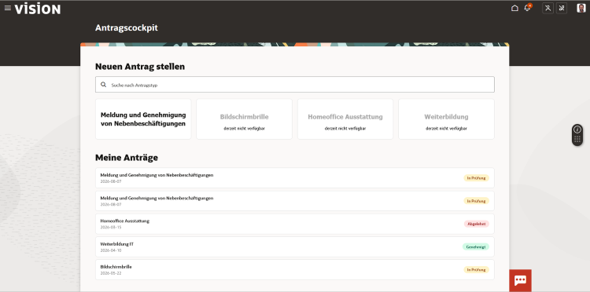 Raise a new request, or track the status of requests already submitted.
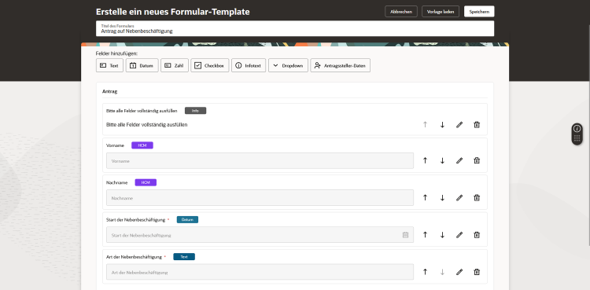 The form builder, with fields pulled straight from Oracle HCM.
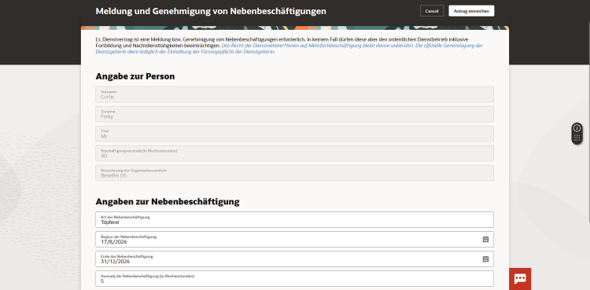 A guided request form with pre-filled employee data and attachments.
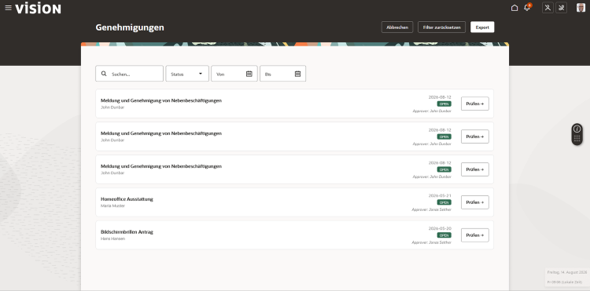 The approver queue.
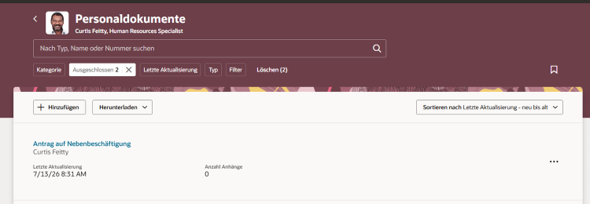 The finished PDF, filed against the right employee record.
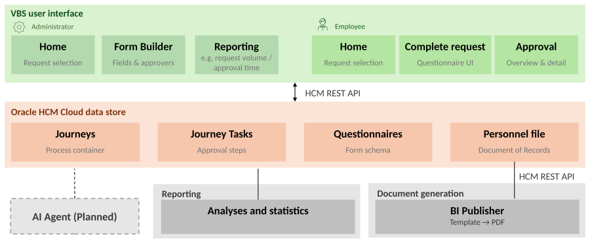 System Architecture