Broadpin

Oracle HCM Journeys: The Digital Checklist for Employees

This blog post was written by Jana Heilek (Principal Consultant Digitized Processes).

Onboarding a new employee. Guiding an employee through requesting parental leave. Walking a manager through the steps of an internal transfer. These processes all share the same underlying challenge: multiple steps, multiple stakeholders, and a real risk that something gets forgotten along the way. Oracle HCM Journeys is designed to solve exactly that problem.

Instead of emails, Excel checklists, and paper forms, a Journey template is created once, and the system assigns the right tasks to the right people at the right time: the employee, the line manager, HR, or IT.

What It Is

Oracle HCM Journeys is a feature within Oracle HCM Cloud that provides guided, step-by-step processes for HR-related workflows. Think of it as a digital checklist, but one that is interactive, personalized, and embedded directly into the tools employees and managers already use every day.

Rather than employees having to figure out on their own what forms to fill out, who to contact, or what training to complete, a Journey lays out every step in a clear sequence. Each step includes one or more tasks that can take many different forms, such as:

  • questionnaires

  • document uploads

  • videos

  • electronic signatures

  • embedded tasks and learnings

  • direct links to pages in Oracle HCM

  • and many more.

With eligibility profiles, organizations can make sure that each person only sees the Journeys and tasks relevant to them, for example based on their role, department, or location.

Journeys can be started in several ways: they can be assigned manually by HR or managers, explored and started by employees themselves, or triggered automatically by events such as a new hire, a transfer, or a termination. Once a Journey is underway, reminders can be set up for overdue tasks, so nothing gets lost along the way. Completed Journeys can be documented and archived as required, giving organizations a reliable record of each process.

Whether the process is onboarding, offboarding, a promotion, a leave of absence, or any other HR event, Journeys turns what used to be a scattered set of instructions into a single, structured path.

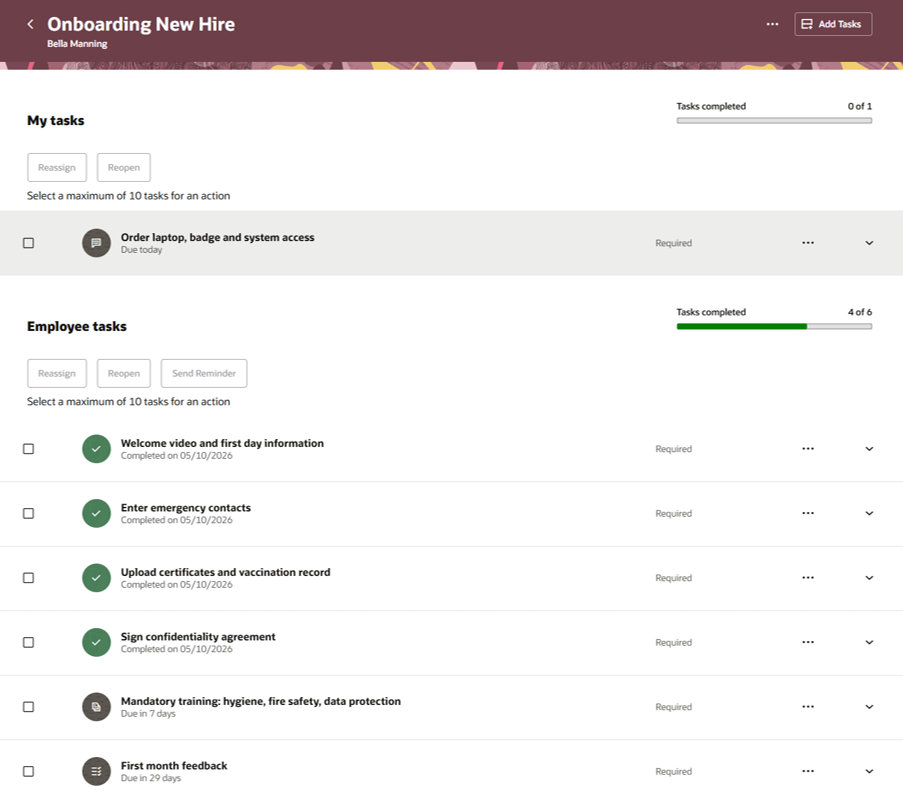
The Journey overview

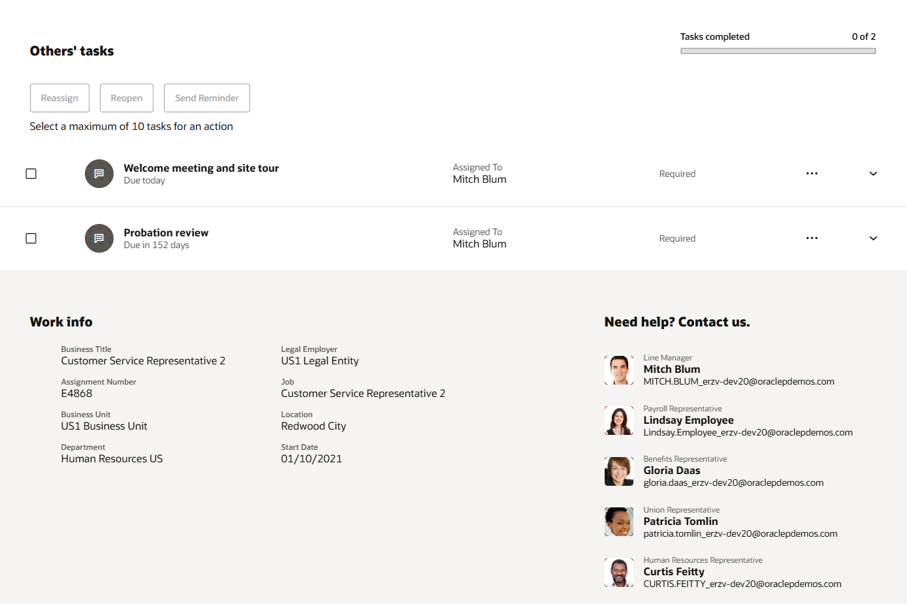
At a glance, you can see which tasks are assigned to whom. In this case to the logged-in HR user (My tasks), the employee, and the line manager (others tasks). The overview also displays the status of each task, along with key employment details of the employee assigned to the Journey and relevant contacts.

  1. Tasks, status, and assigned owners at a glance

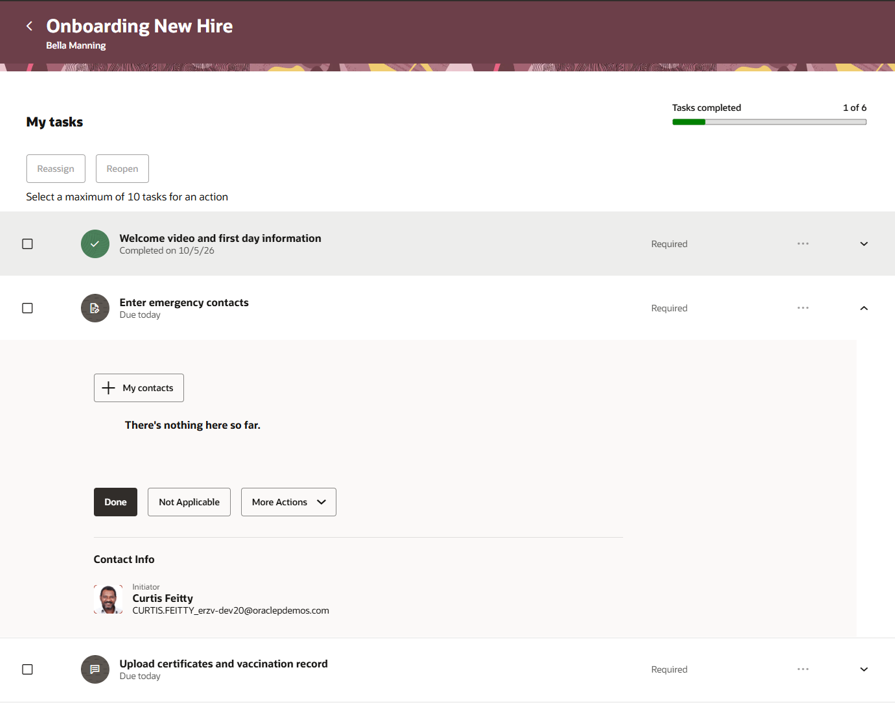
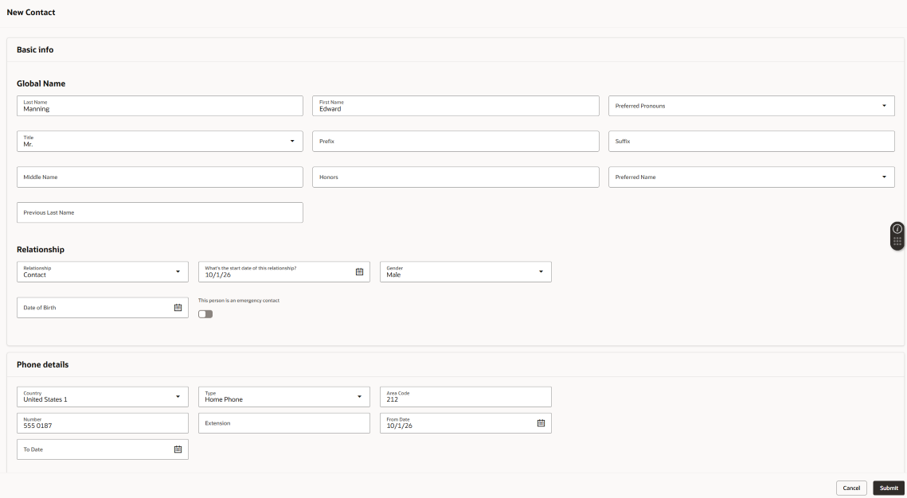
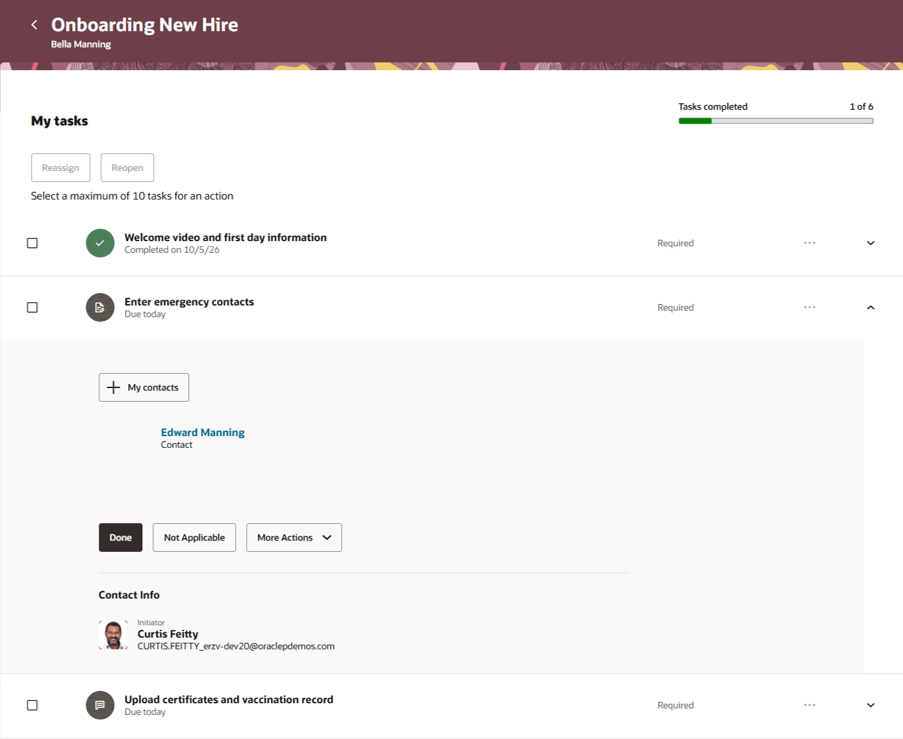
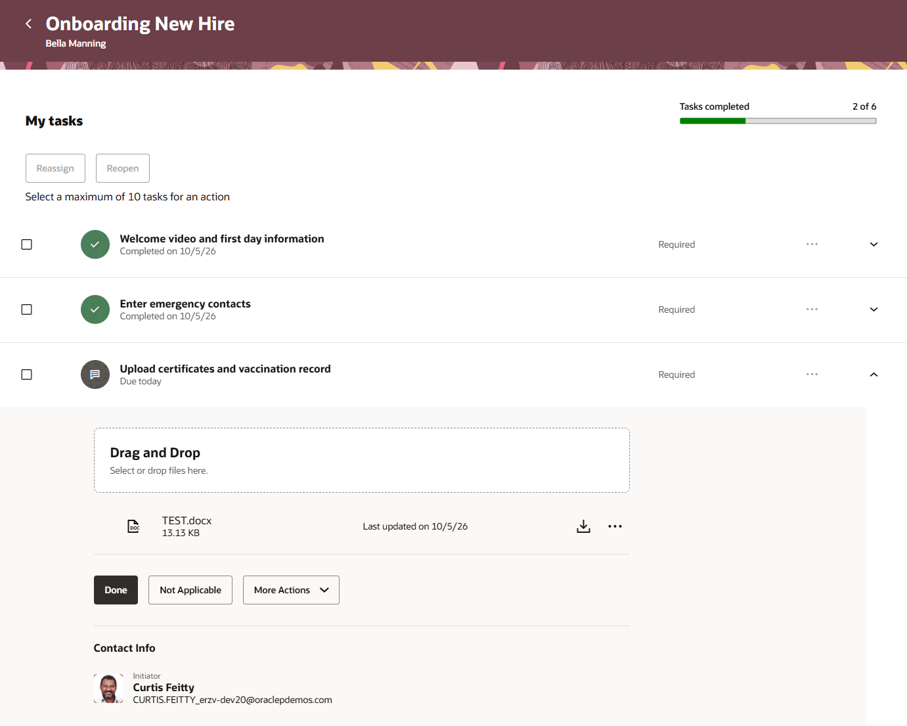
2. An embedded task: updating family and emergency contacts

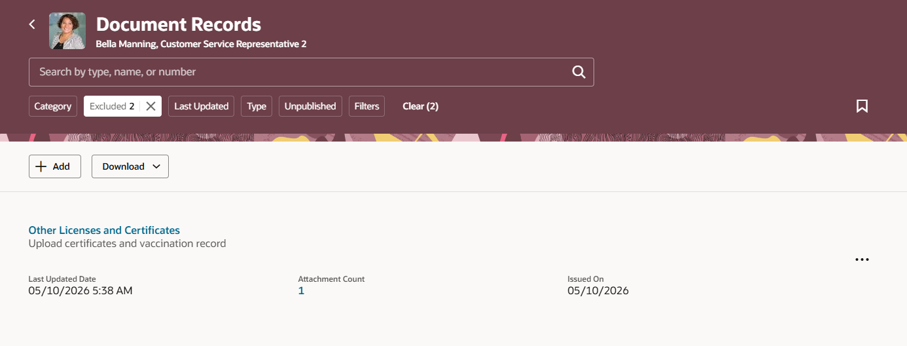
3. Attachments are saved automatically to the employee’s document record

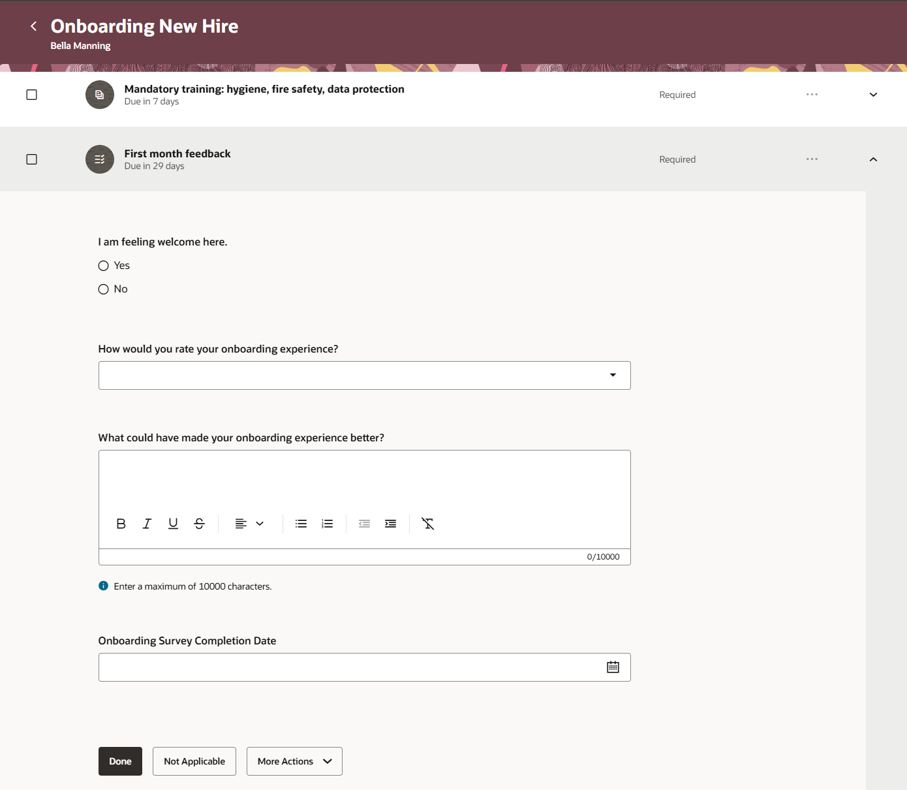
4. A questionnaire task inside the Journey

Why It Matters

More self-service for employees and managers

Instead of relying on HR to answer every question or chase down every task, employees and managers get an interactive checklist that tells them exactly what to do and when. This reduces the number of routine queries landing in HR's inbox and gives people more ownership over their own processes. For example, a new employee can independently work through their onboarding tasks such as adding emergency contacts, completing compliance training, or submitting required documents, all tracked in one place.

Consistent process execution

When onboarding or offboarding is handled ad hoc, quality varies depending on who is running it and how much time they have. Journeys standardizes the process so that every employee, regardless of team, location, or manager, goes through the same well-defined steps. This consistency matters not just for the employee experience, but also for compliance: critical steps like signing agreements, returning equipment, or completing security-related tasks are far less likely to be missed when they are part of a mandatory sequence rather than someone's memory.

The Bigger Picture

Together, these two benefits point to a broader shift happening in HR technology: moving away from HR-as-service-desk toward HR-as-enabler. By giving people the tools to guide themselves through complex processes, organizations free up HR teams to focus on higher-value work, while employees and managers benefit from a clear, well-structured experience at key moments such as starting a new job, changing roles, or leaving the company.

For organizations already running Oracle HCM Cloud, Journeys is a relatively low-effort way to significantly improve process quality and employee experience, since it builds directly on data and workflows already present in the system rather than requiring a separate tool. Journeys can be assigned automatically based on events such as hiring, transfers, or terminations, so the right people get the right tasks at the right time. Organizations can start small with a single process, such as onboarding, and then extend the approach step by step to other areas. Because progress is tracked centrally, HR also has better visibility into open tasks and bottlenecks, which makes processes more consistent, easier to monitor, and easier to improve over time.

What's next?

Journeys only delivers its full value when it is rolled out with care. That is where we come in. We help organizations assess, design, and implement Journeys in Oracle HCM Cloud, from choosing the right processes to start with to setting up tasks, notifications, and eligibility rules.

  • Interested in seeing it in your own context?

Get in touch with the Broadpin HCM team and book a demo. We will walk you through Journeys in a live system, discuss what your current setup would need, and give you a realistic view of effort and value before you commit to anything.

Get in touch with an HCM expert